What smoke control does
In a fire the main danger to people is not the flames but the smoke: it cuts visibility, carries toxic combustion products and fills spaces quickly. Smoke control has three tasks:
- smoke exhaust from the fire room, corridors, lobbies and car parks;
- limiting smoke spread into escape routes and adjacent zones;
- pressurisation of stairwells, lift shafts and lobbies to keep smoke out.
Smoke exhaust fans
A smoke exhaust fan must keep working while moving hot gases for a defined time. The European standard EN 12101-3 tests fans by temperature and time class. Wolter makes fans in:
- F300 — 300 °C for 120 minutes;
- F400 — 400 °C for 120 minutes.
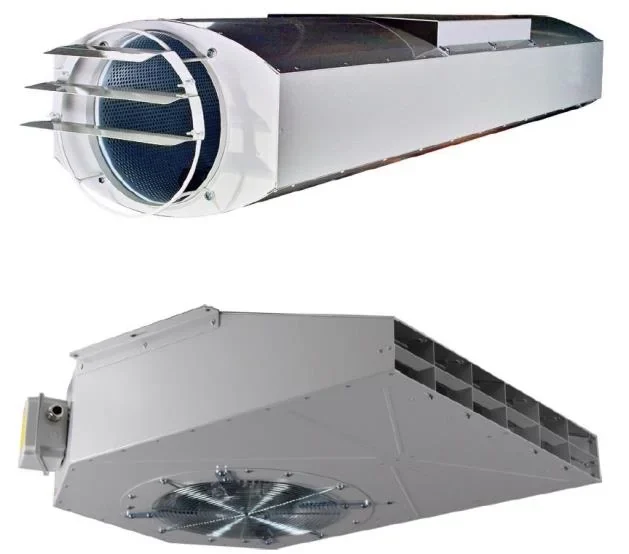
Wolter smoke exhaust products include:
- AXV/BXV axial fans — for car park exhaust shafts, atria and plant rooms;
- AXG two-stage axial fans — for car park exhaust with redundancy;
- RVHT roof smoke exhaust fans — 400 °C, 120 minutes;
- jet fans — for car parks and tunnels.
See the full list in Smoke exhaust fans.
Choosing the fire rating
The class is set by the local codes, the building use and the design fire scenario. What matters is not only the gas temperature at the fan but also the time the system must run and whether the fan sits inside or outside the fire compartment. We help agree the class and version with the design engineer and the reviewing authority.
Installation and power supply
A smoke exhaust fan only works as part of a system. It needs fire-rated cabling, a reliable power supply, suitable flexible connectors and supports and, when used with a frequency inverter, a fire mode that bypasses protections as the manufacturer requires. We include these requirements in the schedule and check them at commissioning.
Testing and handover
After installation the system is commissioned and acceptance-tested. Jet-fan car park systems can also be tested with cold or hot smoke at the client’s or the authority’s request.